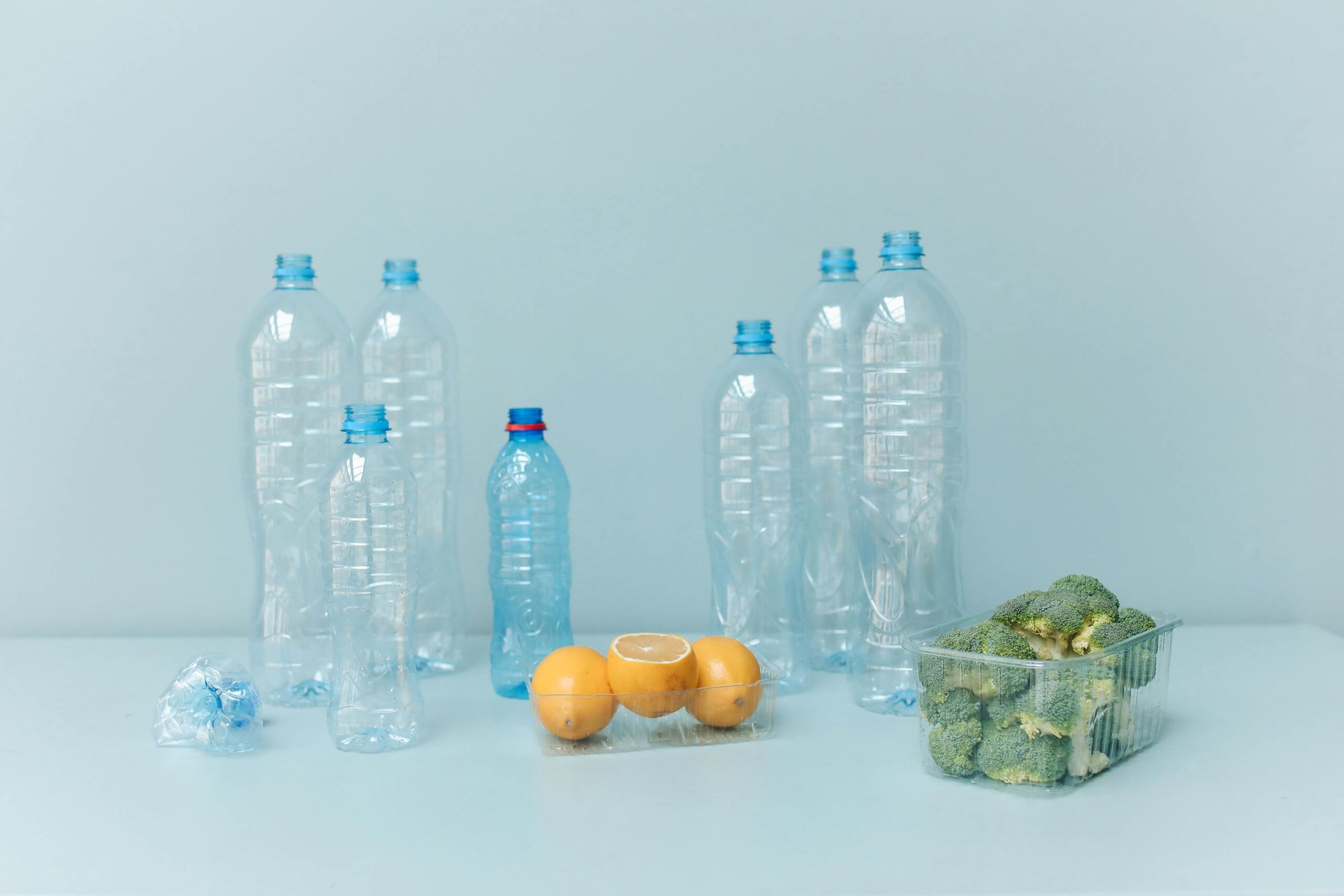
For all the talk of reducing food waste in recent years, the impact of our food’s packaging has remained conspicuously absent from the conversation. The 800-pound gorilla lurking in the world’s refrigerators and pantries is, of course, plastic. Between the milk jug, the mesh bag the avocados came in, the pouch of deli meat, the yogurt tub, the peanut butter jar, the tray of ground beef, the ketchup bottle, the clamshell of berries, the Keurig pods, and the cellophane sleeves of crackers, about 51 percent of the average American’s supermarket haul comes home wrapped in single-use plastic.
Food packaging accounts for roughly 40 percent of the world’s 300 million tons of annual plastic waste, a figure that is projected to exceed 600 million by 2050 and which has health and environmental experts sounding the alarm. Although plastic is recyclable, less than ten percent is reused. The rest is either incinerated, land-filled, shipped abroad, or littered. It eventually cycles into our environment in the form of tiny, metabolized particles called microplastics, polluting our water, air, wildlife, food, and bodies. Plastic is an extremely durable and inorganic material that will never fully break down, meaning that every go-gurt sleeve, coffee cup, microwaveable tray, bottle, and straw you consume over the course of your lifetime will outlive you by hundreds of thousands of years.
Fortunately, there are many alternatives to single-use plastic. Keep reading to find tips and tricks for reducing your food packaging footprint.
BYOB (Bring Your Own Bags)
Invest in your own reusable shopping bags, mesh produce bags, and glass or metal containers to cut down on waste before you even arrive at the store. Plastic shopping and produce bags accumulate quickly, and most grocery stores permit the use of personal containers to store spices, bulk items, dry goods and, in many cases, deli, meat, and bakery items.
Should you choose to go the bulk route, here are a few tips:
- Know Your “Tare”: Tare is the weight of your container. If you bring glass jars for bulk bins, weigh them at the front of the store or at home first. Write the weight on the lid to ensure you aren’t paying for the weight of the glass.
- Deli & Butcher Strategy: Ask for your meat or cheese to be wrapped in plain butcher paper only (no plastic bag) or handed over in your own container.
Similarly, avoid wasteful storage items in your home. Replace single-use plastic bags and cling film with reusable alternatives like silicon bags and beeswax wrap. You may find that these easy swaps save your wallet, along with the planet in the long-term, as they do not need to be replaced at the rate of their pricy, single-use alternatives.
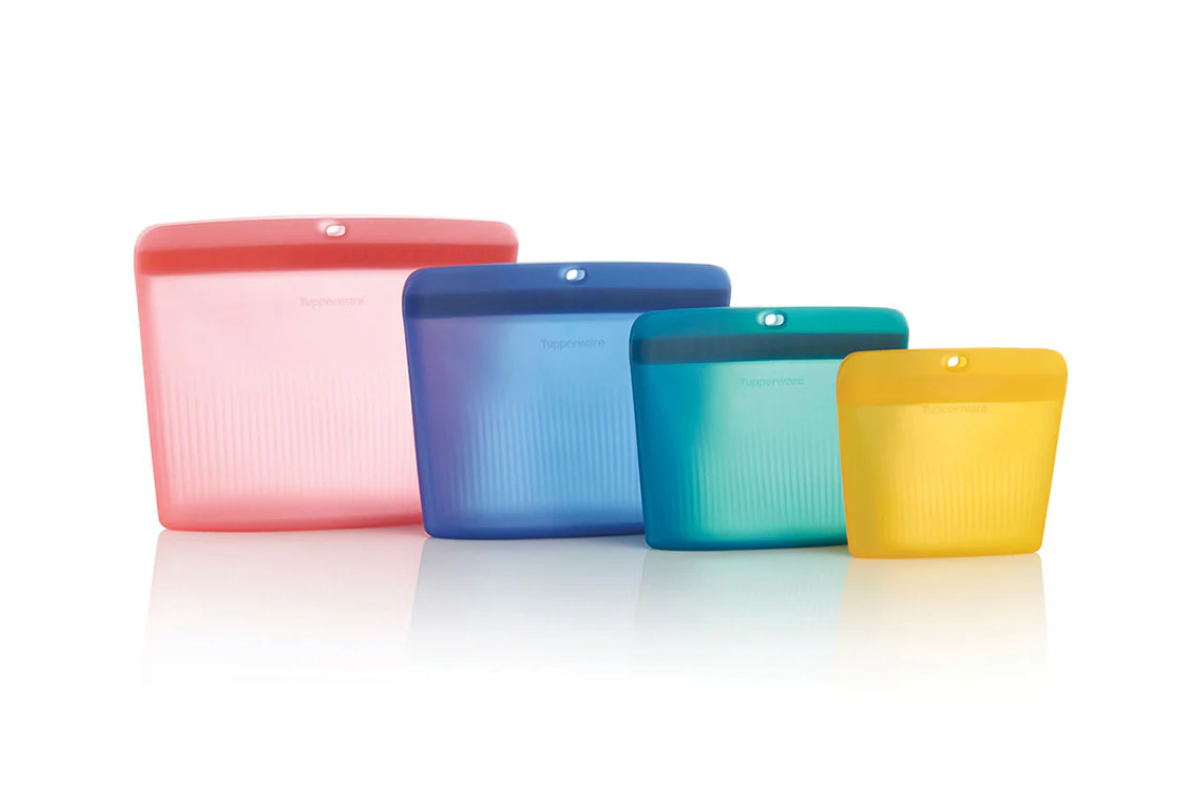
Image: Tupperware brand silicon bags.
Shop Plastic-less Brands
Many of your go-to staples may have brand alternatives with friendlier packaging. For example, you could select butter packaged in cardboard or foil over plastic tubs, milk in cartons rather than jugs, or peanut butter in glass jars instead of plastic.
Additionally, you may also choose to support producers who have consciously decided to swap to low-plastic or non-plastic packaging. A list of these trend-setters can be found here.
Avoid Unnecessary Produce Packaging
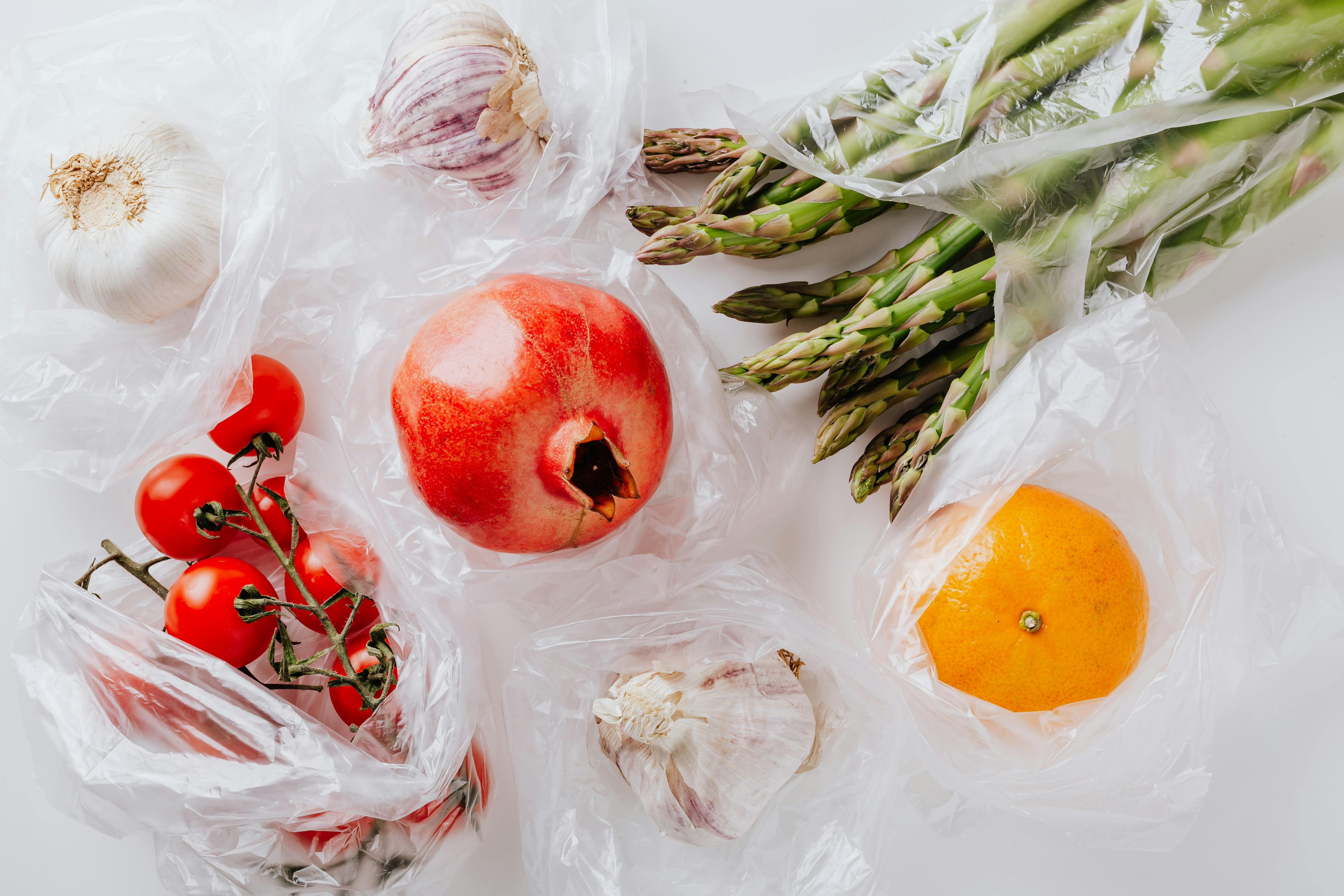
By far, the largest place for unnecessary plastic in the grocery store is the produce section, as most fruits and vegetables come equipped with their own natural, waste-free packaging. Although it is important to ensure your produce is free of chemicals, dirt, and bacteria before consuming, a quick wash at home will remove most contaminants.
Next time you’re in the store, forgo the cellophane and plastic-wrapped items in favor of bare produce, and follow this instructional guide produced by Minnesota’s own CBS New Minnesota to make sure your fruit and vegetables are properly cleaned.
Shop the Perimeter (and the Farmers Market)
The middle aisles of the grocery store are where the most processed, multi-layered plastic packaging lives – think chips, cookies, and frozen meals. Instead, target the perimeter of the store where the produce, protein, and dairy items – which generally have lower plastic content – are stored first.
Also consider skipping the big-box store altogether and shopping locally when possible. Your nearby farmers’ markets will prove the gold standard for low-waste shopping, as many vendors are committed to using sustainable packaging and often encourage the return of berry baskets, egg cartons, and glass milk bottles for reuse.
Midwest Food Connection teaches food education in classrooms across the Twin Cities and beyond. We help students build relationships with their food, and understand how their food choices connect to their environment and community. Through exploring new foods, healthy cooking, and gardening, kids get excited about learning how to nurture their bodies and the environment.
Want to bring MFC to your classroom? Sign up for lessons or follow us on social media to keep up with what we’re up to!
Thank you to our major sponsors